Exploring Sexuality and Health in Early 20th-Century Japanese Girls’ Culture

My dissertation, Shōjo Epistemologies: Gender, Sexuality and Health in Early Twentieth Century Japanese Girls’ Culture, explores official and alternative gender norms. You may associate the word “shōjo” with shōjo manga, the popular genre of girls’ comics. But in the time period I examine in my dissertation – roughly 1910 to 1940 – the word had a different connotation. “Shōjo” translates to girl, but it specifically refers to adolescent girls, and it started to be used around the turn of the century as more and more girls in Japan began to attend secondary school. Because it was primarily girls from wealthy families who were able to continue their education, there was an association too between shōjo and economic privilege.
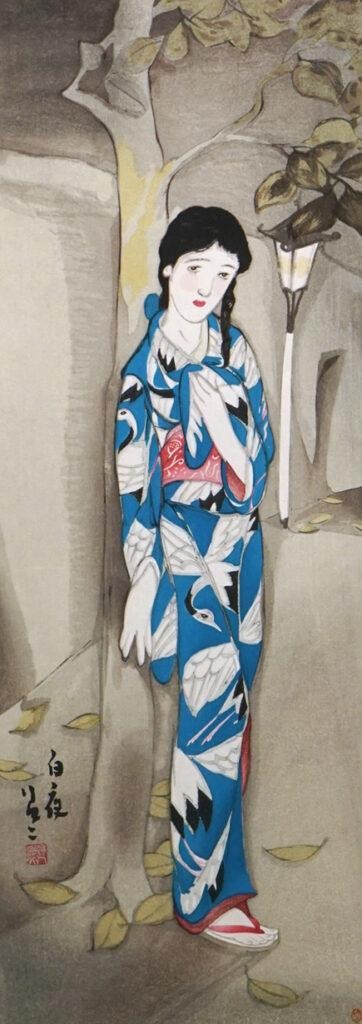
The other term that's important to know is “Good Wife, Wise Mother” (ryōsai kenbo in Japanese). In the 1890s, “Good Wife, Wise Mother” became official education policy; girls’ education was justified on the grounds that girls needed training in the skills necessary to become exemplary wives and mothers in the context of Japanese modernization. Even though “Good Wife, Wise Mother” sounded conservative and Confucian, it was actually an ideology tailored to the new, Western-influenced concept of modern domesticity. In 1911, it was incorporated into the ethics textbooks of elementary schoolers as well, so that all girls, regardless of their age or economic background, learned to aspire to become “Good Wives, Wise Mothers” in future.
Even though “Good Wife, Wise Mother” was official gender policy, my dissertation argues that girls were exposed to an alternative gender ideology through popular culture, particularly girls’ magazines, which became an incredibly popular genre during this time. I examine two elements of such girls’ magazines that I argue go against “Good Wife, Wise Mother” ideology: sexuality and health.
In terms of sexuality, girls’ magazines frequently depicted “S” relationships. “S” was a slang term, short for “sister” or “sisterhood,” and it referred essentially to dating between upperclassmen and underclassmen at girls’ schools. (The younger girl would refer to the older girl as oneesama, a respectful term for an older sister, which is why it was called sisterhood.) These types of relationships were incredibly common at girls’ schools, so they were frequently depicted in girls’ magazines as well.
The other aspect that I look at is the romanticization of tuberculosis in girls’ magazines. In the 1910s, the consumptive look of fragile, sickly femininity was idealized, but in the 1920s and 30s, there was a shift away from tubercular beauty towards healthy athleticism as a new ideal of Japanese womanhood tied to reproductive fitness. I observe, however, that despite this shift in the wider culture, the trope of tubercular beauty remained hugely popular in girls’ popular culture until 1940.

Another major claim of my dissertation is that a queer reading of “S” relationships is legitimate. Many scholars argue that to read “S” relationships as queer would be anachronistic, because they “were not necessarily pathologized, nor were they subversive, but they mimicked heterosexual courtship in a safe, socially acceptable way.” I argue against such an interpretation by looking at how popular sexology, which was also booming during this time, analyzed “S” as “female homosexuality,” and how that perception in turn affected girls’ culture.
I examine this difference in terms of conflicting epistemologies. In the epistemology that I observe in popular sexology, which I call “hentai epistemology,” sexuality is understood in terms of “normal” heterosexuality versus homosexuality, which is “perverse” or hentai. Hentai epistemology is future-oriented, i.e. there is a biopolitical emphasis on an individual’s eventual marriage and reproduction. I contrast this with the epistemology found in girls’ magazines, which I call “shōjo epistemology.” In shōjo epistemology, sexuality is seen not in terms of heterosexual versus homosexual, but rather on a continuum from platonic to romantic and even sexual attraction – what I call “shōjo erotics.” The emphasis is not on the future but rather on the present, because of the awareness of girlhood as a liminal and finite state. This “shōjo temporality” empowers girls to explore gender and sexuality outside of the framework of “Good Wife, Wise Mother.”
A third major claim of this dissertation is that queer critical analysis should utilize disability studies, a theoretical approach known as “queercrip.” In recent years, queercrip theory has gained traction in disability studies, but remains comparatively unknown in queer studies. Queercrip theory argues that the systems that create compulsory heterosexuality and compulsory able-bodiedness are the same. One of the things I attempt in this dissertation is to show how those processes are intertwined, which is why I look at both sexuality and health.
Finally, the last and over-arching claim of my dissertation is that girlhood is important. In the past few decades, one of the major developments in the discipline of history has been the expansion into women's history, which has opened many new analytical possibilities and enabled important theoretical advances. My dissertation argues that one should consider age as well as gender as an important category of analysis. Looking specifically at girlhood rather than womanhood opens new analytical ground, particularly in the realm of sexuality.
Chapter 1 of my dissertation begins with the notorious lovers’ suicide of two schoolgirls in 1911, which incited the introduction of Western sexology to the Japanese public. In the following chapters, I examine major works of shōjo fiction as well as girls’ own writings about “S” and illness to consider how girls’ culture incorporated, adapted, and rejected concepts from popular sexology to construct a version of “normative” girlhood separate from “Good Wife, Wise Mother,” at least until pressure from the wartime government brought an end to the experiment in 1940.


