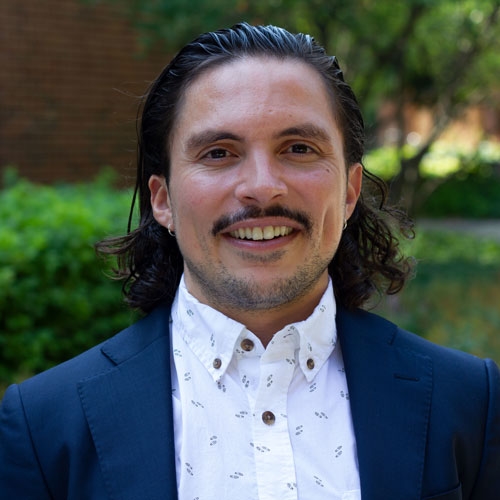
Juan Del Toro
75 East River Parkway
Minneapolis,
MN
55455
In my prior work, I focused on how situations contributed to adolescents’ resilience against racial/ethnic discrimination. Specifically, I studied how the meaning and significance of discrimination varies when its come from different perpetrators (e.g., peers vs. law enforcement) as well as how adolescents derive unique information when they receive racial/ethnic socialization from parents versus educators. Specifically, in my research, I have leveraged multi-method, multidisciplinary, and collaborative approaches to investigate: (1) why distinguishing between perpetrators of ethnic-racial discrimination matters, (2) what are the direct and intergenerational consequences of involvement in the criminal justice system, and (3) what are opportunities (e.g., ethnic-racial identity, ethnic-racial socialization) that peers, educators, and families can leverage to reduce the harmful effects of ethnic-racial discrimination and unwarranted involvement in the criminal justice system on children’s wellbeing. Understanding how discrimination and socialization vary across settings can inform setting-specific policies and interventions working to improve the well-being of all adolescents.
Building on my prior research, I have begun examining how adolescents’ development of resilience today may reflect evolutionary processes that we inherited from our ancestors. In theory, biopsychosocial processes, such as pubertal timing and intimate-relationship involvement, have evolutionary-developmental underpinnings that were effective for our ancestors who experienced chronically stressful and uncertain environments. Building on this literature, my lab is asking questions about whether such processes are adaptive in response to structural racism. For example, does pubertal timing offer youth of color adaptations that support their day-to-day functioning, despite potential long-term health risks? Other questions my lab is asking pertain to whether adaptations adolescents develop in response to one social hierarchy (i.e., racism) are similarly adaptive in response to another social hierarchy (i.e., heterosexism). Elucidating whether evolutionary adaptations that were once effective for our ancestors may not be similarly effective in response to structural racism or heterosexism can reveal the unique facets of today's social hierarchies that require novel approaches to dismantle.
Educational Background
- PhD: Developmental Psychology, New York University Steinhardt School of Culture, Education, and Human Development, 2019
- BA: Latin American Studies and Psychology (minor), Bowdoin College, 2013
Specialties
- applied developmental science
- the achievement gap
- ethnic/racial disparities
- the mental/physical health paradox
- policing and the criminal justice system
- longitudinal social survey methods
- behavioral genetics