Recent Faculty & Staff Books
Check out these recent publications made by the faculty.

Katherine Gerbner. Archival Irruptions: Constructing Religion and Criminalizing Obeah in Eighteenth-Century Jamaica
Duke University Press, 2025.
In 1760, following the largest slave revolt in the eighteenth-century British Empire, the Afro-Caribbean word Obeah first appeared in British colonial law. In Archival Irruptions, Katharine Gerbner traces how British authorities in Jamaica came to criminalize Obeah, a practice that was variously seen as a healing method, an Africana religion, a science, and a form of witchcraft. Gerbner shows that in the years directly preceding its criminalization, for enslaved Africans and Maroons, Obeah was a prophetic practice tied to healing and death rites. Drawing on Moravian missionary archives, Gerbner theorizes these descriptions of African religious beliefs, rituals, and concepts as "irruptions" moments when Africana epistemologies break the narrative of a European-authored archival document. In these irruptions, we see European assertions of authority through the lens of Obeah. Moreover, we find that the modern category of religion is rooted in the histories of slavery, rebellion, and the criminalization of Black religious practices. Gerbner's search for archival irruptions not only creates an opportunity to write an alternative narration about Obeah; it provides a new methodology for all those conducting archival research.

Allen Isaacman, Joy M. Chadya, Barbara S. Isaacman. Elusive Histories: Mozambican Migrant Laborers in Rhodesia, ca. 1900-1980
Ohio University Press, 2025.
At the heart of Elusive Histories is a long-neglected story of the clandestine journeys of Mozambican migrant laborers and their families to Rhodesia. Drawing from oral histories, court records, archives, newspapers, and popular magazines, the authors chronicle Mozambican migration, work experiences, and settlement in Rhodesia. Thousands of men, women, and children traveled long distances, often on foot, to reach Rhodesia. Starting with a trickle of workers seeking to avoid chibharo, a Mozambican agricultural forced-labor system, the number of migrants peaked in the 1950s.
In 1958, the Rhodesian government passed legislation to bar new Mozambican migrants from entering large cities, redirecting them toward agriculture and mining. When Black Rhodesian laborers began to complain about losing jobs to Mozambicans, the restrictions became an outright ban to prevent further migrants from entering the country.
Contrary to previous assumptions, Mozambican labor in Rhodesia was not contract labor derived from bilateral negotiations between the Mozambican colonial and Rhodesian governments. In fact, many Mozambicans who came to work and live in Rhodesia arrived as illegal migrants. The book also demystifies the widely held notion that all foreign migrant workers in Rhodesia who spoke Nyanja were Nyasalanders. Because Nyanja is widely spoken at the confluence of Malawi, Zambia, and Mozambique, many Mozambicans who came to work in Rhodesia were fluent. Despite the national, racial, and cultural differences and the discrimination in job placement, promotion, and housing, Mozambican migrant laborers creatively adapted and made Rhodesia home for the duration of their lives.

Zozan Pehlivan. The Political Ecology of Violence Peasants and Pastoralists in the Last Ottoman Century
Cambridge University Press, 2024.
In this innovative, interdisciplinary work, Zozan Pehlivan presents a new environmental perspective on intercommunal conflict, rooting slow violence in socioeconomic shifts and climatic fluctuations. From the nineteenth to the early twentieth centuries, recurrent and extreme climate disruptions became an underlying yet unacknowledged component of escalating conflict between Christian Armenian peasants and Muslim Kurdish pastoralists in Ottoman Kurdistan. By the eve of the First World War, the Ottoman state's shifting responses to these mounting tensions transformed the conflict into organized and state-sponsored violence. Pehlivan upends the 'desert-sown' thesis and establishes a new theoretical and conceptual framework drawing on climate science, agronomy, and zoology. From this alternative vantage point, Pehlivan examines the impact of climate on local communities, their responses and resilience strategies, arguing that nineteenth-century ecological change had a transformative and antagonistic impact on economy, state, and society.

Howard Louthan and Tryntje Helfferich (co-editors). Beyond the Battlefield: Reconsidering Warfare in Early Modern Europe
Routledge, 2024.
This volume draws together an international team of scholars to explore the experience and significance of early modern European continental warfare from an interdisciplinary perspective.
Individual essays add to the lively fields of War and Society and the New Military History by combining the history of war with political and diplomatic history, the history of religion, social history, economic history, the history of ideas, the history of emotions, environmental history, art history, musicology, and the history of science and medicine. The contributors address how warfare was entwined with European learning, culture, and the arts, but also examine the ties between warfare and ideas or ideologies, and offer new ways of thinking about the costs and consequences of war. In addition to its interdisciplinarity, the volume is distinctive in including chapters focused not only on Western and Central Europe but also the often-ignored European peripheries, such as the Baltics and the Russian frontier, Scandinavia, and the Habsburg-Ottoman borderlands of Southeastern Europe. As a whole, the volume offers readers interesting alternatives and threads for reconsidering the place and meaning of warfare within the larger history of early modern continental Europe.
This book will be valuable for general readers, undergraduate and graduate students, and scholars interested in military, early modern, and European history.

Yalile Suriel (co-editor), with Grace Watkins, Jude Paul Matias Dizon and, John Joseph Sloan III. Cops on Campus: Rethinking Safety and Confronting Police Violence
University of Washington Press, 2024
Interrogates the relationship between higher education and the carceral state
Over the last five years, headlines have thrust campus police departments from relative obscurity into the national spotlight. Campus constituents have called for campus police, as a tangible manifestation of the War on Crime within the sphere of higher education, to be disarmed, defunded, and abolished. Using a multidisciplinary approach that draws from the fields of history, American studies, ethnic studies, criminology, higher education, and sociology, Cops on Campus provides critical perspectives on the organization and social consequences of campus policing. Chapters uncover details of the structure and culture of university police—some of the best-funded and largest private police forces in the nation—and examine the institution in relation to racialized and gendered violence, racial profiling, and the surveillance of marginalized communities on and off campus. The volume also features interviews with students, staff, and faculty activists to showcase efforts to redefine and reimagine campus safety and explore alternatives for the future.

Allen F. and Barbara S. Isaacman. Mozambique’s Samora Machel: A Life Cut Short (Ohio Short Histories of Africa)
Ohio University Press, 2020
The precipitous rise and controversial fall of a formidable African leader.
Samora Machel (1933–1986), the son of small-town farmers, led his people through a war against their Portuguese colonists and became the first president of the People’s Republic of Mozambique.
Machel’s military successes against a colonial regime backed by South Africa, Rhodesia, the United States, and its NATO allies enhanced his reputation as a revolutionary hero to the oppressed people of Southern Africa. In 1986, during the country’s civil war, Machel died in a plane crash under circumstances that remain uncertain.
Allen and Barbara Isaacman lived through many of these changes in Mozambique and bring personal recollections together with archival research and interviews with others who knew Machel or participated in events of the revolutionary or post-revolutionary years.

Basic Books, 2019
The United States is known as a nation of immigrants. But it is also a nation of xenophobia. In America for Americans, Erika Lee shows that an irrational fear, hatred, and hostility toward immigrants has been a defining feature of our nation from the colonial era to the Trump era. Benjamin Franklin ridiculed Germans for their "strange and foreign ways." Americans' anxiety over Irish Catholics turned xenophobia into a national political movement. Chinese immigrants were excluded, Japanese incarcerated, and Mexicans deported. Today, Americans fear Muslims, Latinos, and the so-called browning of America.
University of North Carolina Press, 2019
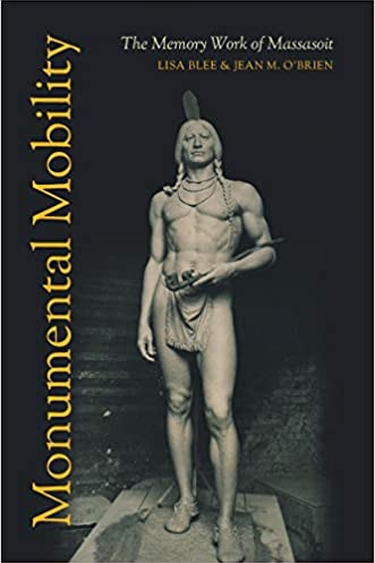
Installed at Plymouth, Massachusetts, in 1921 to commemorate the tercentenary of the landing of the Pilgrims, Cyrus Dallin's statue Massasoit was intended to memorialize the Pokanoket Massasoit (leader) as a welcoming diplomat and participant in the mythical first Thanksgiving. But after the statue's unveiling, Massasoit began to move and proliferate in ways one would not expect of generally stationary monuments tethered to place. The plaster model was donated to the artist's home state of Utah and prominently displayed in the state capitol; half a century later, it was caught up in a surprising case of fraud in the fine arts market. Versions of the statue now stand on Brigham Young University's campus; at an urban intersection in Kansas City, Missouri; and in countless homes around the world in the form of souvenir statuettes.
Hatchette Book Group, 2017
For the last sixty years, fear has seeped into every area of American life: Americans own more guns than citizens of any other country, sequester themselves in gated communities, and retreat from public spaces. And yet, crime rates have plummeted, making life in America safer than ever. Why, then, are Americans so afraid-and where does this fear lead to?
In this remarkable work of social history, Elaine Tyler May demonstrates how our obsession with security has made citizens fear each other and distrust the government, making America less safe and less democratic. Fortress America charts the rise of a muscular national culture, undercutting the common good. Instead of a thriving democracy of engaged citizens, we have become a paranoid, bunkered, militarized, and divided vigilante nation.
Oxford University Press, 2018.
Why did the last of the major European campaigns to reclaim Jerusalem end in an attack on Tunis, a peaceful North African port city thousands of miles from the Holy Land? In the first book-length study of the campaign in English, Michael Lower tells the story of how the classic era of crusading came to such an unexpected end. Unfolding against a backdrop of conflict and collaboration that extended from England to Inner Asia, the Tunis Crusade entangled people from every corner of the Mediterranean world. Within this expansive geographical playing field, the ambitions of four powerful Mediterranean dynasts would collide. While the slave-boy-turned-sultan Baybars of Egypt and the saint-king Louis IX of France waged a bitter battle for Syria, al-Mustansir of Tunis and Louis's younger brother Charles of Anjou struggled for control of the Sicilian Straits. When the conflicts over Syria and Sicily became intertwined in the late 1260s, the Tunis Crusade was the shocking result.
University of Pennsylvania Press, 2018
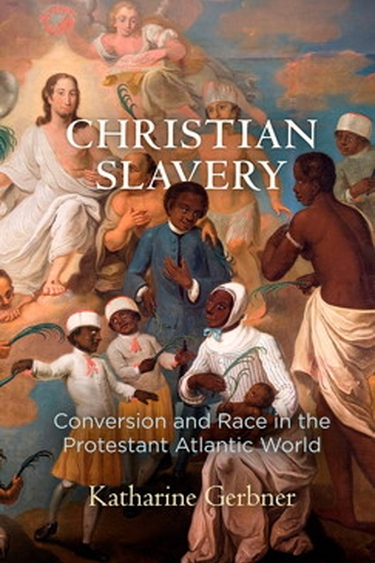
Could slaves become Christian? If so, did their conversion lead to freedom? If not, then how could perpetual enslavement be justified? In Christian Slavery, Katharine Gerbner contends that religion was fundamental to the development of both slavery and race in the Protestant Atlantic world. Slave owners in the Caribbean and elsewhere established governments and legal codes based on an ideology of "Protestant Supremacy," which excluded the majority of enslaved men and women from Christian communities. For slaveholders, Christianity was a sign of freedom, and most believed that slaves should not be eligible for conversion.
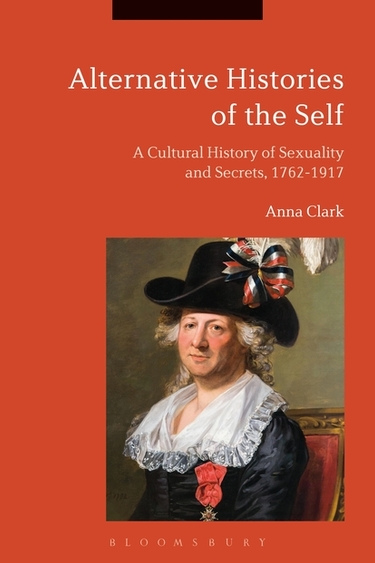
Bloomsbury Academic Press, 2017
Alternative Histories of the Self investigates how people re-imagined the idea of the unique self in the period from 1762 to 1917. Some used the notion of the unique self to justify their gender and sexual transgression, but others rejected the notion of the unique self and instead demanded the sacrifice of the self for the good of society. Instead of focusing on the thoughts of great thinkers, this book explores how five unusual individuals twisted conventional ideas of the self as they interpreted their own lives.
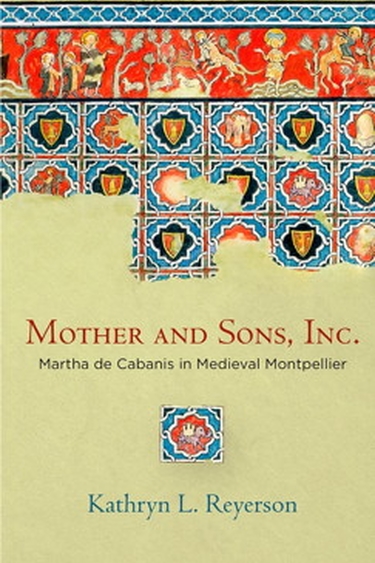
University of Pennsylvania Press, 2017.
In the late 1320s, Martha de Cabanis was widowed with three young sons, eleven, eight, and four years of age. Her challenges would be many: to raise and train her children to carry on their father's business; to preserve that business until they were ready to take over; and to look after her own financial well-being. Examining the visible trail Martha left in Montpellier's notarial registers and other records, Kathryn L. Reyerson reveals a wealth of information about her activities, particularly in the area of business, commerce, and real estate. From these formal, contractual documents, Reyerson gleans something of Martha's personality and reconstructs what she may have done, and a good deal of what she actually did, in her various roles of daughter, wife, mother, and widow.