Looking Back with Gratitude
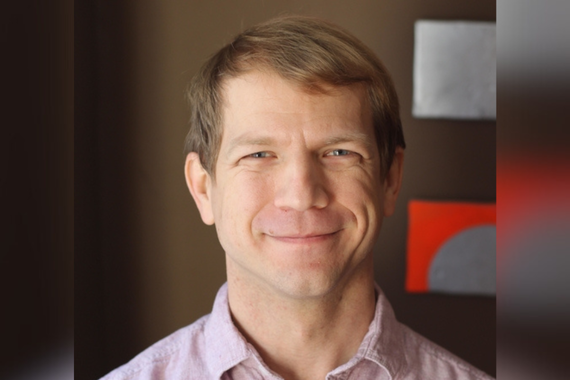
While at the University of Minnesota (UMN), Pedro Accorsi (PhD '23) studied international relations and comparative politics. His involvement in and beyond the program prepared him for his current position at the Institute of Political Science, Pontificia Universidad Católica de Chile. Read the below Q&A to learn more about his graduate school experience.

Why did you choose the University of Minnesota political science program?
When I visited UMN, I noticed students were happy and excited about their work. They were working on interesting research, and there was a good intellectual energy. I felt confident I could thrive regardless of where my intellectual interests took me. People were also kind and considerate, and I felt that the faculty genuinely wanted to recruit me.
Someone wisely advised me to consider where I'd be happiest during grad school, since it would be at least five years of my life. I felt I would be happiest at UMN, and the visit sealed it for me.
What was your graduate school experience like?
I worked with an outstanding committee: top scholars in their fields and caring mentors. When I struggled to make progress or went through personal challenges, they offered help, sympathy, and understanding. They read my drafts carefully, met with me regularly, and provided thoughtful feedback. Their mentorship was critical to my success, and I continue to collaborate with both of my co-advisors, Tanisha Fazal and Ron Krebs, on research projects.
Also important was the collaborative culture among graduate students. My cohort became friends, and the environment was never competitive. The department cultivated community through symposiums and colloquia where we engaged with each other's work.
I developed my teaching skills as a teaching assistant for international relations courses and as the instructor for my own course. Working as a research assistant for faculty members gave me experience with high-level research, and helped me build relationships. The department's financial support through fellowships allowed me to focus on my research without financial stress.
The training itself was excellent, with rigorous substantive courses and several options for methods training. The department was also supportive of international students like myself, with initiatives that helped us navigate the U.S. academic system.
This combination of intellectual rigor and supportive community made my experience at UMN something I look back on with gratitude.
What is your current position?
I started as an assistant rofessor at the Institute of Political Science at Pontificia Universidad Católica de Chile in 2025. Before this position, I was a postdoctoral fellow at the University of Notre Dame's International Security Center from 2023-25.
My responsibilities include the usual mix of research, teaching, and service. On the teaching front, I develop and teach undergraduate and graduate courses. My research focuses on international conflict and civil-military relations. I'm currently working on several projects, including my book manuscript and several academic articles. I also engage with the broader academic community through conference presentations, peer review service for academic journals, and research collaborations with other scholars from different universities & countries.
What did you do during graduate school to prepare you?
As I mentioned, the environment, mentoring, and training were excellent. I was given real teaching responsibilities and valuable research experience.
The department also encouraged and funded conference participation. I presented at major conferences, which helped me build my network and get feedback on my work.
With encouragement from my advisors, I pursued external training and funding opportunities. I sought out specialized workshops and participated in the Cato Institute's Junior Scholar Symposium. I was fortunate to receive the Hans J. Morgenthau Fellowship at the Notre Dame International Security Center. These experiences provided excellent training and helped me build networks with junior & senior scholars from other institutions, exposing me to different approaches and research agendas.
Working as an RA allowed me to observe and participate in research firsthand. My mentors taught me how to secure external funding and manage large research projects. Additionally, some of my publications grew out of these collaborations.
I was fortunate to serve as Managing Editor at Security Studies from 2020-22, when Ron Krebs became Editor-in-Chief. The timing was lucky, but it speaks to the caliber of the department. This role taught me about the inner workings of the publication process, and I read work from leading scholars and interacted with them.
What advice would you give to students?
There's a lot of luck involved in any trajectory, and each person's context is unique. I always thought of being in graduate school as a privilege. It can be difficult, but it matters how one frames the experience. I felt lucky to be paid to read, learn, and ask questions about topics I found fascinating.
I want to be honest: this career isn't for everyone. The work can be lonely and requires you to create your own structure & motivation. Success often takes years to materialize, and people drop out. You need to find satisfaction in the day-to-day work of research rather than in some idealized vision of academic life. If you love doing research and you're sure this is what you want to do, as I was, then thinking about it as a privilege might help, even knowing there's a chance things might not go as planned.
Pedro is always happy to connect through his personal website with current or prospective students who have questions about the program or career paths.
Composed by Sophia Paschke, communications associate.