Giere Memorial Lecture in Philosophy of Science
The Ronald Giere memorial lecture in philosophy of science is made possible by an estate gift from former MCPS director Ronald Giere, who passed away in 2020.
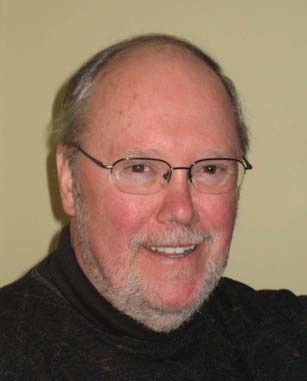
Giere taught in the Department of History and Philosophy of Science at Indiana University (Bloomington) before moving to the University of Minnesota in 1987 as Professor of Philosophy and MCPS Director. He was widely known for his work on models and scientific representation, articulated in books such as Scientific Perspectivism (2006), which emphasized how models are like maps that represent the world based on the conventions and purposes of the scientists who create them. As a result, they always offer particular and limited points of view. Ron edited several volumes in the Minnesota Studies in Philosophy of Science, such as Cognitive Models of Science (1992) and Origins of Logical Empiricism (1996). He was a fellow of the American Association for the Advancement of Science, a long-time member of the editorial board of the journal Philosophy of Science, and past president of the Philosophy of Science Association. Ron’s book Understanding Scientific Reasoning, now in its fifth edition, was designed to impart intellectual skills for understanding and evaluating science; it is still used as a textbook for the undergraduate course PHIL 1005 Scientific Reasoning.
Previous lectures

Cyclones, Forecasts, and Uncertainty: How Model-Ensembles Can Be an Effective Guide to Anticipatory Action
24 April 2026 at 3:30pm in the Pinnacle Ballroom, The Graduate Minneapolis.
Many important decisions are based on models offering detailed representations of physical systems. However, these models are often subject to uncertainty, which is reflected in the use of model ensembles in decision-making processes. We present a version of the confidence approach that uses model ensembles as input and show how this approach can be employed to build a confidence-sensitive decision support tool for anticipatory humanitarian action. We apply the tool to Cyclone Kenneth, which made landfall in Mozambique in April 2019. Comparing the level and timing of the alerts actually triggered with those recommended by the tool shows that a decision-maker would have acted earlier had they used the tool, considerably reducing the cyclone's impact.
Roman Frigg: Professor of Philosophy and Head of Department, London School of Economic's Department of Philosophy, Logic and Scientific Method.
A recording of this talk is available on the MCPS Youtube channel.

Epistemic Communities and their Situated Knowledges: an Introduction to Perspectival Realism
12 April 2024, University Hall, McNamara Center
In this Giere Memorial Lecture I go back to Ron Giere’s seminal work on Scientific Perspectivism (2006) to ask what a scientific perspective is, how it differs from Kuhn’s notion of scientific paradigm, and how it captures the situated knowledge of particular epistemic communities. I then clarify the ontology of nature that I see as naturally accompanying the notion of scientific perspective and its implications for how to think of scientific knowledge as a multicultural enquiry.
Michela Massimi: FRSE, FRAS, MAE, Department of Philosophy, School of Philosophy, Psychology and Language Sciences, The University of Edinburgh
A recording of this talk is available on the MCPS Youtube channel.

Interdisciplinary Innovation on the Frontiers of Science
The inaugural lecture took place on 28 April 2022, Best Buy Theater, Northrop.
In this talk, I discuss findings from a cognitive-ethnographic investigation of epistemic practices in cutting-edge research labs in the bioengineering sciences. Specifically, I focus on how researchers in these fields create the innovative methods by which to model – in vitro or computationally – complex biological systems. In addition, I discuss what “integration” means in these interdisciplinary communities, where model-building provides the locus of cognitive, social, material, and cultural integration.
Nancy Nersessian: Regents' Professor of Cognitive Science Emerita, School of Interactive Computing, Georgia Institute of Technology and Research Associate, Department of Psychology, Harvard University.
A recording of the lecture can be seen on our Youtube channel.