Jalisco
Located in the southwestern region of Mexico, Jalisco is a coastal state that shares borders with Nayarit, Zacatecas and Aguas Calientes to the north, San Luis Potosi to the northeast, Guanjuato to the east, and with Michoacan and Colima to the south. The seventh geographically largest and fourth most populous state in the country, Jalisco, as of 2015, has a population of about 8 million people. Among its 125 municipalities is Guadalajara, the capital city, which has a metropolitan area--composed of San Pedro Tlaquepaque, Tonalá, Zapopan, Tlajomulco de Zúñiga, El Salto, Juanacatlán, Ixtlahuacán de los Membrillos and Guadalajara--that is home to about 5 million.

Disapperances in Jalisco
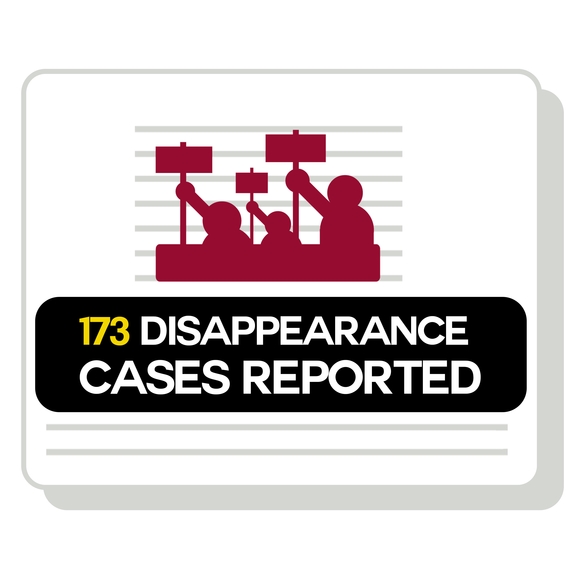
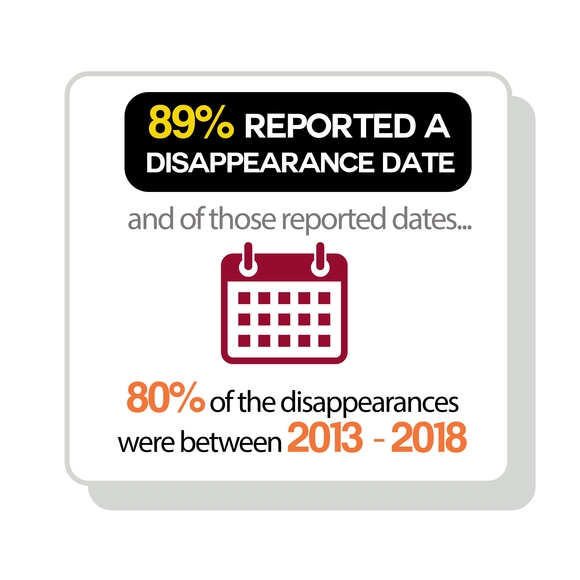
Systematic disappearances in Jalisco skyrocketed after 2013 and press reports rose accordingly. According to the National Search Commission in Mexico, the state of Jalisco had a total of 7,376 disappeared or missing persons between 2009 and 2018. The Observatory’s press database includes 173 cases of disappeared victims in Jalisco during this time period. This five-year time period accounts for 8 out of 10 (80%) of all disappearances reported in Jalisco during the decade, with a total of 138 victims. During these five years, disappearances were reported at a fairly consistent rate, with an average of 23 victims reported per year.
| 173 Disappearance Cases Reported | 89% Reported a Disappearance Date |
|---|---|
|
|
Infographic stats: 173 disappearance cases reported. 89% reported a disappearance date; and of those reported dates: 80% of the disappearances were between 2013-2018.
Circumstances have only worsened since 2018. The rate of disappearance accelerated, with an additional 9,593 reported disappearances between 2018 and 2021, making Jalisco one of the most serious sites of enforced disappearances in the entire country.
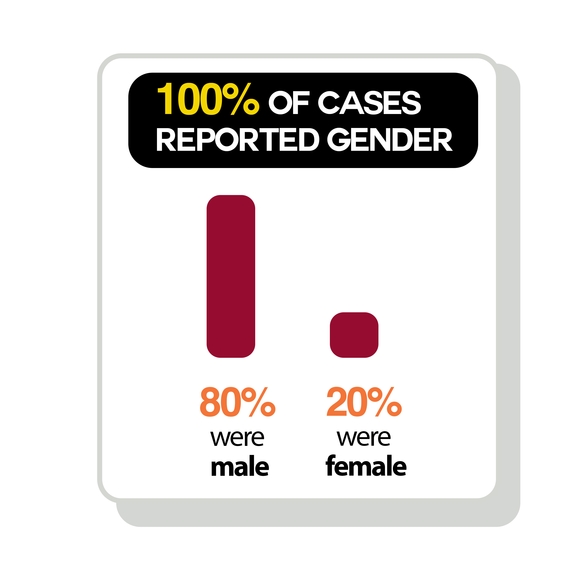
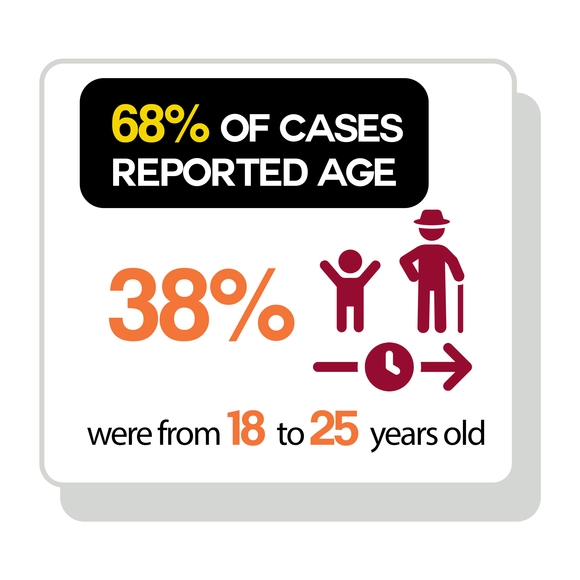
According to the press reports from 2009 to 2018, 7 of 10 (70%) victims were disappeared in Jalisco alone, while 3 of 10 (30%) were reported to have been disappeared in a group. This is a markedly different pattern than in other states where the tendency was for the press to report an even number of group and individual victims. Similar to our findings in other states, the vast majority of reported victims of disappearances were male; 80% victims were identified as males and 20% of disappearance victims were female. The youth of the disappearance victims is consistent with trends observed in other states: 38% of victims were reported as being between the ages of 18 and 25 years old.
| 100% of Cases Reported Gender | 68% of Cases Reported Age |
|---|---|
|
|
Infographic stats: 100% of Cases Reported Gender; 80% were male; 20% were female. 68% of Cases Reported Age; 38% were from 18 to 25 years old.
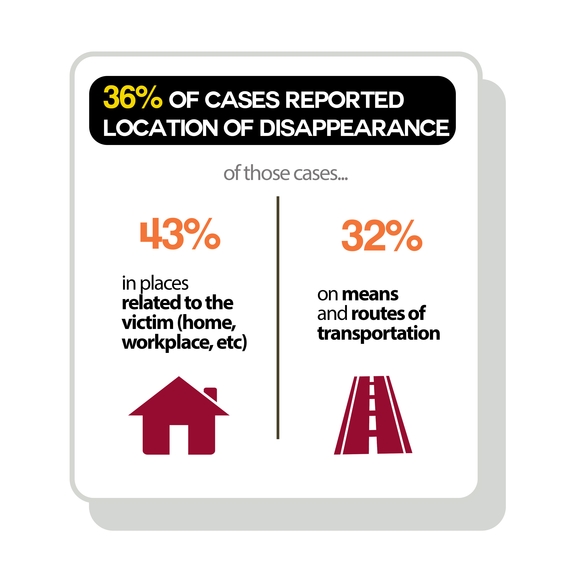
When reported, three-quarters of disappearances took place in locations related to the victim - house, workplace, private property - (43%) or on means and routes of transportation (32%).
| The Municipality was Stated in 60% of Cases | 36% of Cases Reported Location of Disappearance |
|---|---|
|
|
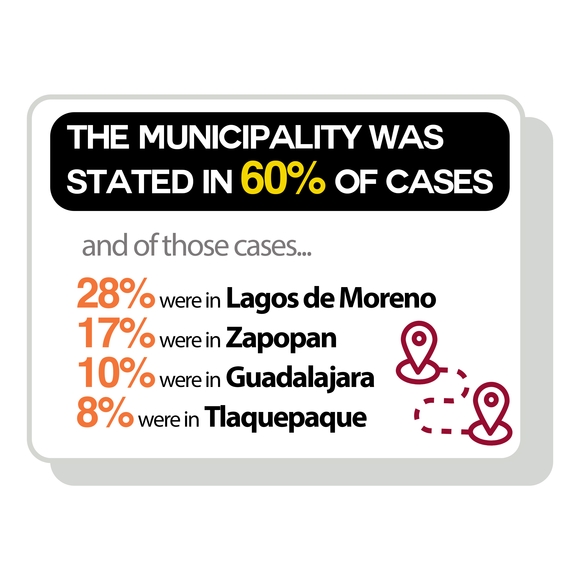
Infographic stats: The municipality was stated in 60% of cases; and of those cases: 28% were in Lagos de Moreno; 17% were in Zapopan; 10% were in Guadalajara; 8% were in Tlaquepaque. 36% of cases reported location of disappearance: 43% in places related to the victim (home, workplace, etc); 32% on means and routes of transportation.
Disappearances were reported in 23 of the 125 municipalities in Jalisco. Out of cases where municipality was reported, the three municipalities with the highest reported disappearances were Lagos de Moreno, Zapopan, and Guadalajara. Compared to other states, the press reported disappearances in more municipalities, exhibiting a more dispersed pattern of disappearances. The press did not report the municipality of disappearance in 40% of cases.
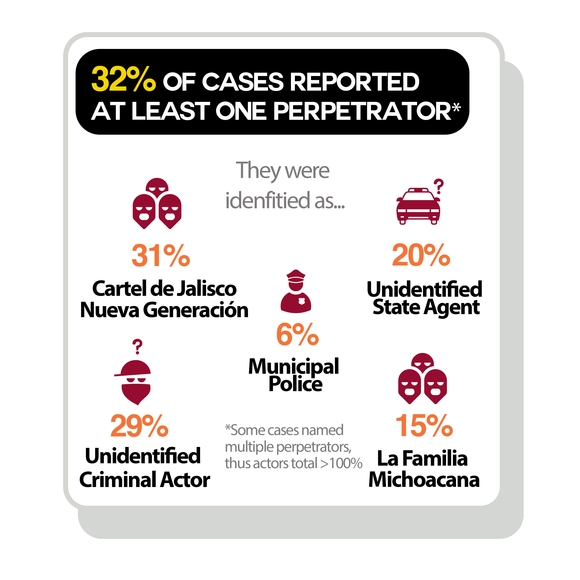
In Jalisco, the press did not report a suspected perpetrator in more than two-thirds (68%) of cases. When a perpetrator was reported, in over half (55%) of the cases, the victim was disappeared by a private actor (including criminal organizations), in 29% of cases, the press held a state actor responsible, and in 16% they acted together. The group reported as responsible for the highest number of disappearances was the Cartel de Jalisco Nueva Generacion, who was involved in 31% (17 cases) of reported disappearances.
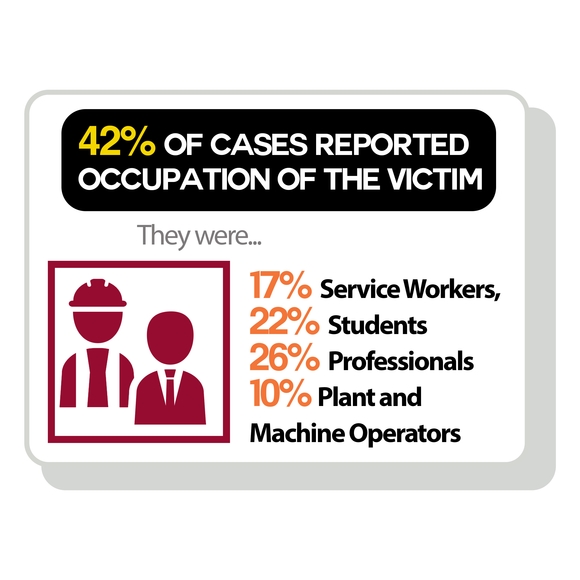
| 32% of Cases Reported at Least One Perpetrator | 42% of Cases Reported Occupation of the Victim |
|---|---|
|
|
Infographic stats: 32% of cases reported at least one perpetrator (some cases named multiple perpetrators, thus actors total >100%). They were identified as: 31% Cartel de Jalisco Nueva Generacion; 20% Unidentified State Agent; 6% Municipal Police; 29% Unidentified Criminal Actor; 15% La Familia Michoacana. 42% of cases reported occupation of the victim; they were: 17% service workers; 22% students; 26% professionals; 10% plant and machine operators.
Criminalizing the Victim: an excuse for impunity
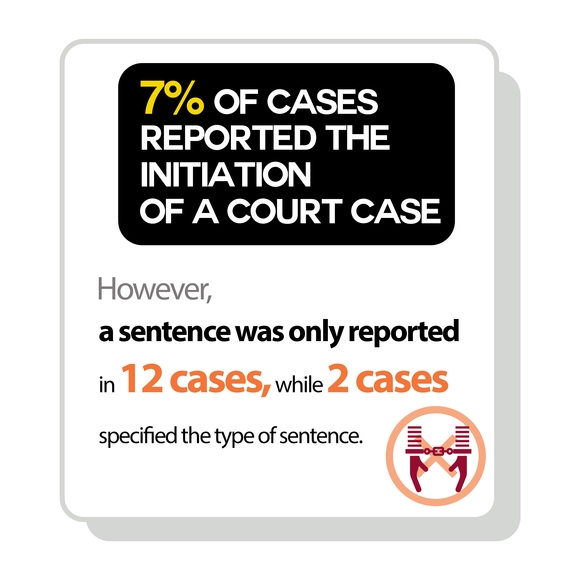
Press stories about disappearances in Jalisco rarely reported on the state’s efforts to establish accountability for the crimes. In 89% of reported cases in Jalisco, the coverage did not include information about an investigation or charges in the crime. Only 13 reported cases (11%) suggested the initiation of a court case and, of those, only five cases reported a conviction or a sentence; however, no cases specified the type of sentence.
Even when criminal responsibility for disappearances was discussed in these cases, those facing jail time were not the only ones under scrutiny. The victims frequently stand accused, without indications of proof, of involvement in drug cartels and other unscrupulous acts. This phenomenon is illustrated in the reporting about the disappearance and murder of Andres B (age 15) and Luis Antonio O (age 14). Both boys were kidnapped and killed because they bullied the son of a drug lord, as reported. Press coverage included assertions by the attorney general in a press conference concerning the boys’ supposed interest and potential involvement in narcotrafficking. Instead of treating these victims as such, prosecutors and investigators alike publicly speculated about Andres B’s and Luis Antonio O’s involvement in criminal activity and implied that they were at least partially responsible for their own deaths.
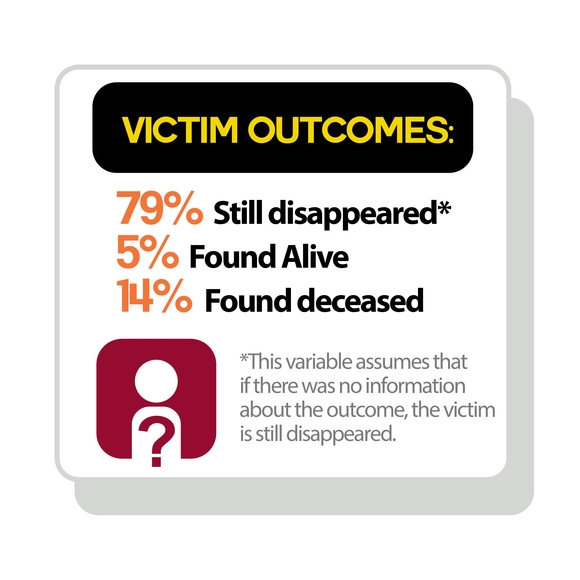
| Victim Outcomes | 7% of Cases Reported the Initiation of a Court Case |
|---|---|
|
|
Infographic stats: Victim outcomes: 79% still disappeared (This variable assumes that if there was no information about the outcome, the victim is still disappeared); 5% found alive; 14% found deceased. 7% of cases reported the initiation of a court case; However, a sentence was only reported in 12 cases, while 2 cases specified the type of sentence.
A downloadable PDF of these infographics is available here.
Case of the Three Film Students
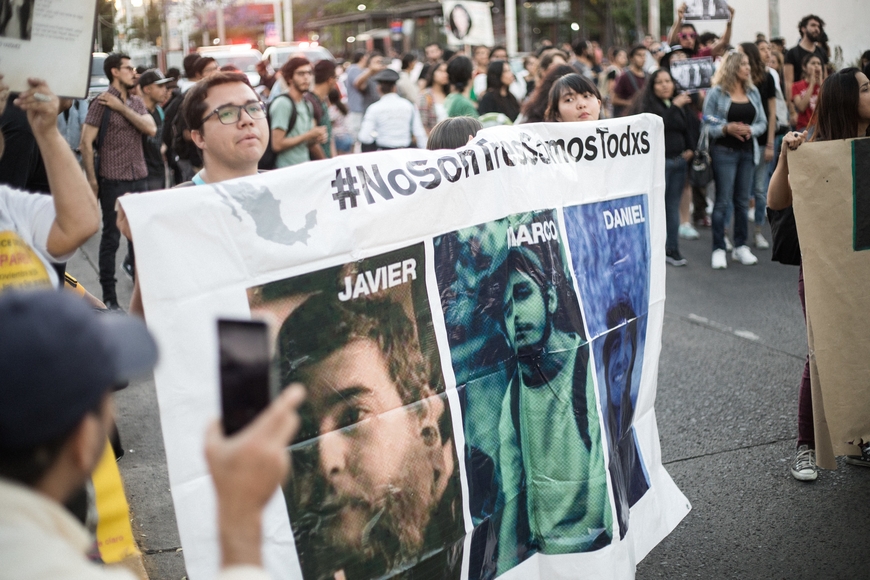
In the middle of a project for the University of Audiovisual Media in Guadalajara, three film students were disappeared, never to be seen or heard from again. The students' names were Javier Salomon Aceves Gastélum, Marco Garcia Francisco Ávalos, and Jesus Daniel Díaz. On March 19th, 2018, during their spring break, the students decided to shoot their film project at Javier’s aunt’s house in Tonala, Jalisco. The filming location can be described as a country house, outside the city of Guadalajara, and in more of a rural area. Unknown to them, the house was also frequented by the Nueva Plaza gang.
Nueva Plaza is a gang that rivals one of Mexico's most powerful cartels, the Cartel Jalisco New Generation. During the spring of 2018, both of the cartels were preparing for the release of Diego Gabriel Mejía, a member of the Nueva Plaza cartel who had previously been detained in the same house where the students filmed their project. In anticipation of Mejías release, the Cartel Jalisco New Generation paid close attention to the house, keeping it under surveillance. It was also presumed that El Cholo, Nueva Plaza’s leader, might turn up there. Jalisco’s attorney general’s office believes that the students' presence on the property created suspicion causing the Cartel Jalisco New Generation to react.
Leaving the house after filming one day, the students experienced car trouble. The mechanical problems forced them, along with four of their peers, to pull over. They were then approached by two vehicles. Out of the vehicles came armed men dressed as law enforcement. After ordering the students to get down on the ground, they forced Javier, Marco, and Jesus into one of their vehicles. Javier’s cousin, Alejandra, was one of the others with them during the confrontation. She recounts seeing men with guns telling them they were police and ordering them to duck down. When she lifted her head, the vehicles were gone. The three students were then driven to a house six kilometers away. Authorities would later find uniforms with the Attorney General's Office logo and army exclusive weapons at the safe house.
Once the students were secured in the new location, members of the Cartel Jalisco New Generation began beating and torturing them to gain information on the Nueva Plaza cartel. Javier unfortunately succumbed to his wounds during the brutal interrogation. According to the chief investigator on the case, Lizette Torres, after Javier's death, the gang members decided they needed to execute Marco and Jesus. Once all three students were dead, it is presumed that their bodies were taken to another location, a nearby farm, to be dissolved in acid. When authorities investigated this location on April 18th, they discovered 46 cans of sulfuric acid and 18 different genetic profiles, leading them to believe that the house had previously been used to dispose of bodies. On April 23rd, Jesus and Marco’s genetic material was identified. Javier’s DNA was never confirmed.
On that same day, April 23rd, two men, Omar ‘N’ and Gerardo ‘N’ were arrested in association with the murders. Both of the men are assumed to be members of the Cartel Jalisco New Generation. Omar ‘N’ confessed that he, along Gerado ‘N’, were personally responsible for dissolving the bodies in acid on the farm. Omar ‘N’ also goes by the rapper name QBA and is well known in the region and on YouTube. On May 10th, a third person was arrested who is believed to be connected to the crimes. Johnathan ‘N’ was arrested in Mepotec after fleeing from police for months. It is reported that at least 8 people participated in the students disappearance and murder.
The family of one of the three students rejected the police’s narrative, fearing that the prosecutors were trying to close the case and move on too quickly. They believe that the evidence presented by the Attorney General's office lacked legal support. They also understood that the case framed the government in an unfavorable way very close to the July 1st general election. Criminal expert María Lina Guetierrez explained that there will never be certainty surrounding what happened to the students.
The case gained international attention, thanks in part to Oscar winning director Guillermo del Toro, who is a Guadalajara native. With the help of his 1.36 million twitter followers, he assisted in spreading the hashtags #NoSonTresSomosTodxs and #LosTresEstudiantesDeCine. Celebrities like del Toro not only drew attention to the case of the three cine students, but to disappearances in Jalisco and in Mexico in general. Thousands protested the students' disappearance in Guadalajara and in Mexico City, and continue to do so especially on March 19, the date of the students’ disappearance.
Unlike most disappearances in Mexico, the case of the three films students gathered a significant amount of press coverage. Google searching “three film students in Mexico” in Spanish or English will produce millions of results. This is what sets this case apart from others analysed in this database and why it was not included.
Javier, nicknamed Salo, was 25 years old. He is described as dedicated, with a bright future in cinematography. He also had a passion for playing the drums. Marco Avalo was 20 years old. He dreamed of being a director and was known for bringing fun to his friend group. Daniel Diaz was also 20 years old. He was a calm and joyful person who enjoyed playing soccer.
Students from the University of Audiovisual Media released a video titled Los Tres Estudiantes de Cine. The video encompasses their fear, betrayal, and plea for help.