Undergraduate Alumni
Ways to Connect with CLA Students
Students are looking to connect with you, our alumni. They're looking for advice, career stories, mentors, informational interviews, internships, and even jobs. Can you help? A day, an hour, or even the few minutes it takes to answer an email can make a big difference. Learn how you can connect with CLA students.
Our department seeks to support and build upon the richness and diversity of the region in which we are embedded. Our alumni report that our core classes in theory, research methods, and social statistics gave them meaningful skills that they use in their daily work. Are you interested in being profiled? We're always looking to connect with our alumni! Contact us at [email protected].
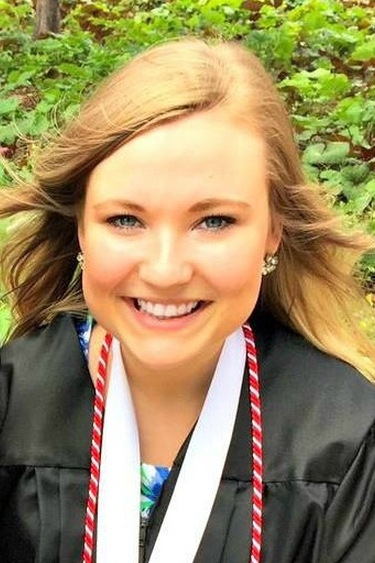
B.A. Sociology; Minor., Asian and Middle Eastern Studies, 2023
Current Position: 2nd Year PhD Student in Sociology at the University of Minnesota
What drew you to the Sociology program at UMN?
I started college as a Psychology major, but everything changed in late 2020 during the height of the COVID-19 pandemic when I took a course called Race, Class, and Gender. I do not remember exactly what led me to enroll in that class. It may have been to fulfill a liberal arts requirement. What I do remember is that something shifted in me halfway through the course. Thinking sociologically can be difficult, especially in a society that emphasizes individualism, personal responsibility, and self-reliance. But once I began to connect my personal struggles to larger public issues, everything started to come into focus. As C. Wright Mills wrote, the sociological imagination is both magnificent and terrible. It is magnificent because it reveals that what we often experience as private troubles are actually shared by many others and shaped by broader social forces. That realization gave me a sense of clarity and even liberation. I stopped blaming myself for problems that were not entirely mine to carry.
How has a major in Sociology helped you in your current role?
I am currently a PhD student in Sociology at the University of Minnesota, so I did not go far—but my undergraduate experience in the same department prepared me in exactly the right ways. Two key research experiences stand out. First, I spent nearly two years working with Professor Carolyn Liebler on a project about American Indian boarding schools. Second, I worked with the NCHAT project at the Minnesota Population Center on a study examining how much couples know about each other’s identities, under the guidance of Professor Claire Kamp Dush and Dr. Alexandra VanBergen. Both of these opportunities allowed me to take the lead on real research. The faculty gave me the space to work independently, which was challenging but also incredibly rewarding.
What is some advice you would give to incoming students who are interested in majoring in Sociology?
Be open to letting sociology shift how you see the world—and how you understand yourself. It is a major that asks big questions and challenges common assumptions that appear "normal," which can feel uncomfortable at times, but that discomfort is part of the process. It means you're thinking critically and beginning to see the deeper forces shaping everyday life. That’s where the real growth happens. Also, don’t limit yourself to what happens in the classroom. Some of the most valuable learning comes from doing—whether that means joining a research project, attending talks, or just having conversations with faculty. When I was an undergrad, getting involved in research with faculty mentors not only gave me skills I still use today, but also helped me figure out what I cared about and where I wanted to go next. Although often awkward or anxiety-producing, I do recommend reaching out to your professors—they are actually some of the most supportive and passionate people you’ll meet.
B.S. Sociology of Law, Criminology & Deviance; B.A. Statistics; Minor in Political Science: Direct Track to Teaching, 2021
Current Position: Data Analyst, Philadelphia District Attorney's Office
What drew you to the Sociology program at UMN?
I think most social science majors came to our field for two reasons: an unparalleled curiosity that fosters us to question the truth behind our social world, and a deep-down compassion and commitment that drive us to search for our role in this society. This holds true for people in various social disciplines, including social work, criminology, political science, and others, but is especially relevant to sociology. As a young teenager, I was desperate to know my social relationships with the world and what social roles I could play, and I thought sociology would provide me with the answer. It didn't exactly. However, my undergraduate study in this discipline facilitated my inquiry into these questions and, in turn, helped me fulfill my social responsibilities.
How has a major in Sociology helped you in your current role?
My sociology of criminology study, along with my service learning at two social justice organizations and multiple charter and public schools, opened the door to a vast new world for me and showed me, almost in a brutal way, how other people are living in this world and the struggles they are facing. From there, I developed a strong curiosity to know what's going on, what works, and how I can support these people. Oh, there are these issues of police brutality, police mental health problems, and police-military culture. There, we see issues of mass incarceration and the damages of traditional prosecution. Then, beyond empiricism, what are the facts about it, and what are the facts about possible solutions? This is where data, qualitative storytelling, and many methods came in. Now we know what works, but how can we make it work in real life? Social research has never been far away from politics. Many people don't like to recognize this, but to turn research into a policy, a bill, or legislation, we need to work with both sides.
What is some advice you would give to incoming students who are interested in majoring in Sociology?
We live in a critical time when new things emerge and old problems persist. In this ever-evolving world, I think the most important thing is to know what you want in life and career. It's okay that you don't have an answer for now, but remember life is worth fighting for, and you need to know that "what". Few of you would live your life as a sociologist, perhaps by pursuing a PhD, but in addition to your curiosity, consider how you can apply this knowledge to help others.
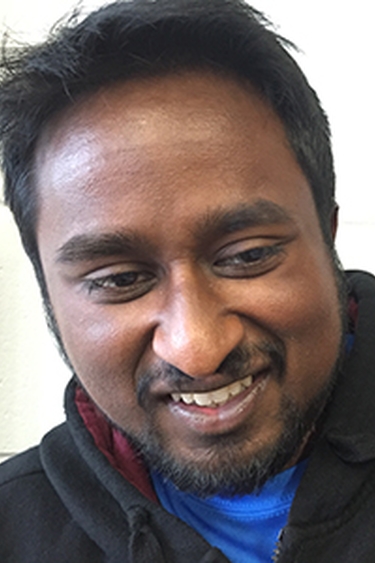
B.A. Sociology of Law, Criminology & Deviance, 2020
Current Position: Voucher Specialist at Research and Innovation Office, Co-founder and host of Noggin Comics
What drew you to the Sociology program at UMN?
Oddly, Sociology was a part of my life, and it took me a while to realize it. I did not start in Sociology; I finished an associate's degree in Communication in Film and came back to the UMN with a focus on Sports Management. However, two things influenced me to change my major to sociology: my father, who loved the study and saw opportunities to do good work in the community. The second thing that influenced me to the department was attending a seminar by Matthew Desmond.
How has a major in Sociology helped you in your current role?
Early on, Sociology played a significant role in my career. I worked with the Institute for Social Research and Data Innovation in many roles. One of these roles was as a researcher. Social statistics and Social Theory played a role in my task as a researcher. My current role as a Voucher Specialist does not present an opportunity to use the knowledge from Sociology, but it did open the doors to this role. Sociology has aided me in my hobby and, hopefully, my potential career in the comic industry.
What is some advice you would give to incoming students who are interested in majoring in Sociology?
If I could give any advice to incoming students, it would be this: Do not be afraid of Social Statistics and Social Theory! These will be the most challenging courses, but once you graduate, you will know you can accomplish anything.
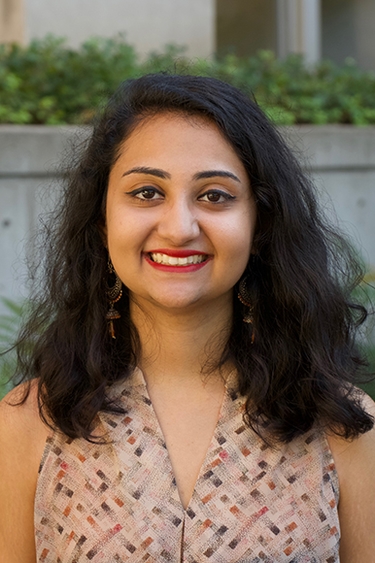
B.A. Sociology of Law, Criminology & Deviance, 2019
Current Position: Leadership Annual Giving Officer at the University of Minnesota Foundation
What drew you to the Sociology program at UMN?
As a transfer student, I knew I wanted to be intentional about where I put my energy. I was drawn to Sociology because I was curious not only about how our own society functions, but also about how communities around the world operate. I wanted to explore the recurring patterns and systems that uphold inequality across different contexts. As a first-generation college student and Cuban-American, I was also seeking a way to make sense of both the privileges I carry and the marginalization I’ve experienced.
How has a major in Sociology helped you in your current role?
I have a deep appreciation for the Sociology department. I thoroughly enjoyed my classes, valued the guidance of my advisor, and was especially grateful for the opportunity to serve as a teaching assistant during my final undergraduate semester. That positive experience inspired me to help future students make the most of their college journey. Since graduating, I’ve continued that commitment, building a career entirely in higher education. The program gave me a strong foundation for understanding the broader social and institutional factors that shape access, equity, and opportunity in higher education. It also helped me approach my work with empathy, critical thinking, and a commitment to social impact.
What is some advice you would give to incoming students who are interested in majoring in Sociology?
Explore a variety of courses to get a feel for the different areas within Sociology. Also, take the time to connect with your professors. Those conversations can lead to mentorship, research opportunities, and deeper understanding of the material.