Quantitative/Psychometric Methods (QPM)
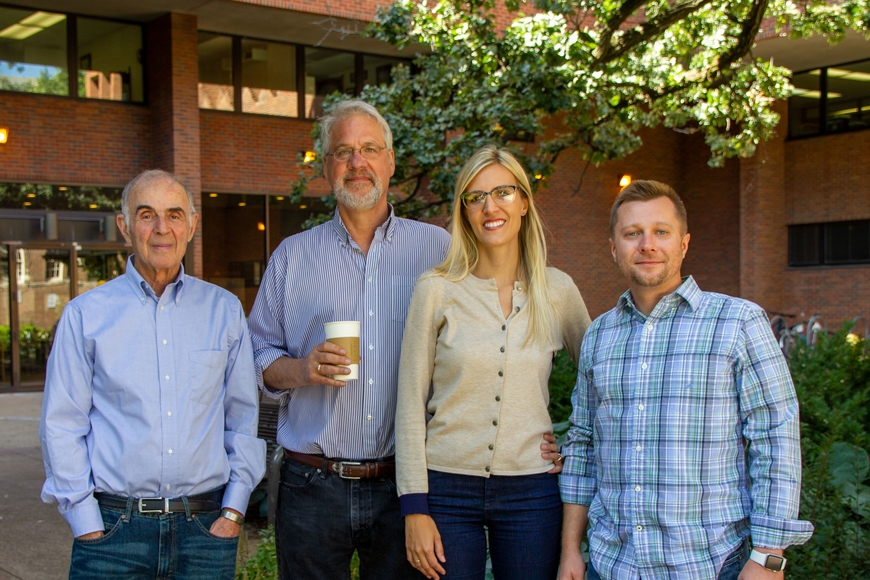
The Quantitative and Psychometric Methods (QPM) area of specialization of the Psychology PhD program is internationally recognized for advancing the science of psychological measurement and quantitative methodology. Our faculty are leaders in developing innovative statistical methods and measurement approaches that improve the quality, rigor, and reproducibility of behavioral and social science research.
QPM provides rigorous training in both the theoretical foundations and practical applications of quantitative methods. Students work closely with faculty whose expertise spans topics such as item response theory, structural equation modeling, longitudinal data analysis, multilevel modeling, multivariate methods, factor analysis, computerized adaptive testing, nonparametric methods, machine learning/data mining, and the analysis of “big datasets.” The program encourages methodological innovation while emphasizing the application of these techniques to substantive questions across psychology, education, health sciences, and related disciplines.
Our philosophy is that advances in psychological science depend on advances in measurement and methodology.
Research
The Quantitative and Psychometric Methods (QPM) program prepares students for research, teaching, and technical careers in academia, government, healthcare, nonprofit organizations, and industry. We prepare students not only to apply existing quantitative techniques, but also to develop innovative methods that address emerging challenges in psychological measurement and the analysis of psychological change. Through collaborative research, individualized mentorship, and interdisciplinary training, students develop expertise in translating psychological observations into meaningful quantitative information; designing and evaluating the reliability and validity of psychological measures; developing new approaches to scaling psychological data; modeling complex behavioral processes and psychological change; and translating data into meaningful scientific knowledge. The QPM area maintains a close collaboration with the School of Statistics, and many students acquire an MS in Statistics while enrolled in the program. The QPM program does not accept students for a terminal MA.
Curriculum
QPM is in the process of updating its curriculum for the 2027-28 academic year. Prospective applicants are invited to preview our proposed revised curriculum. The Psychology PhD entry in the Graduate Education Catalog does not reflect these changes, but does provide general information on the Psychology PhD program.
Funding Opportunities
The Department of Psychology offers a variety of funding opportunities to graduate students, including assistantships, fellowships, and a training program supported by a T32 grant from the National Institutes of Health.
For more information, please see the Funding Opportunities webpage or the page on the Training Grant.
How to Apply
Prospective students should apply to the Psychology PhD Program.
In our admissions process, we look for quantitative interests and skills as well as some understanding of basic methods, techniques, and approaches to psychological research. We do not require a mathematics or statistics major or minor for admission, but prospective students should appreciate the usefulness of mathematical and statistical methods as a tool in psychology. Coursework in calculus, linear algebra, and statistics are also helpful.
Faculty
Core Faculty
The Psychology PhD program requires all applicants to identify a primary advisor who is core faculty in the area of specialization they are applying to. Consult the list of Faculty Considering New Advisees to identify which of the following faculty are accepting students for this application cycle.
- Katerina M. Marcoulides, Associate Professor and Area Director
- Nate Helwig, Associate Professor
- David J. Weiss, Professor
Area Collaborating Faculty
Graduate students in the QPM area also have opportunities to collaborate with and take courses from individuals outside of QPM. The following individuals make important contributions to our intellectual community:
- Nathan Kuncel, Dunnette Distinguished Professor and McKnight Presidential Fellow, Industrial-Organizational Psychology (I-O)
- Richard Landers, Campbell Distinguished Professor, Industrial-Organizational Psychology (I-O)
- James Lee, Associate Professor, Personality, Individual Differences, and Behavior Genetics (PIB)
- Deniz Ones, Hellervick Professor and Distinguished McKnight University Professor, Industrial-Organizational Psychology (I-O), Area Director of I-O Psychology
- Whitney Ringwald, Hathaway Endowed Assistant Professor, Clinical Science and Psychopathology Research (CSPR)
- Moin Syed, McKnight Presidential Endowed Professor, Personality, Individual Differences, and Behavior Genetics (PIB)
- Scott Vrieze, Professor, Clinical Science and Psychopathology Research (CSPR), Area Director of CSPR
The above list is not exhaustive; students also frequently collaborate with individuals not on this list. Collaborators who are core faculty in another area of specialization within the Department of Psychology sometimes serve as co-advisors for current students. However, they do not typically admit new students in an area except as co-advisors, and do not participate in the area’s review of applications for graduate admissions.
Research Collaborators
The QPM faculty also collaborate, or have consulting relationships, with the following UMN faculty:
- Melissa Ertl, Assistant Professor, Counseling Psychology
- Juan Del Toro, McKnight Land Grant Assistant Professor, Personality, Individual Differences, and Behavior Genetics (PIB)
- Iris Donga Vilares, Assistant Professor, Cognitive and Brain Sciences (CAB)
- Wilma Koutstaal, Professor, Cognitive and Brain Sciences (CAB)
- Claire Kamp Dush, Professor, Department of Sociology
- Ann Meier, Professor, Department of Sociology
- Stephen Engel, Professor, Cognitive and Brain Sciences (CAB), Area Director of CAB
- Angus MacDonald III, Distinguished McKnight University Professor, Clinical Science and Psychopathology Research (CSPR)
- Colin DeYoung, Professor, Personality, Individual Differences, and Behavior Genetics (PIB), Area Director of PIB
- Scott Sponheim, Professor, Department of Psychiatry and Behavioral Sciences
- Ka I Ip, Assistant Professor, Institute of Child Development (ICD)
Emeritus Faculty
- Niels G. Waller, Professor